Dr. Abhinav Kesarkar | Orthopedic Surgeon In Nagpur


Primary hip replacement in Adilabad
Primary hip replacement in Adilabad
Primary Hip Replacement in Adilabad by Dr. Abhinav Kesarkar is a life-changing surgical procedure designed for individuals suffering from persistent hip pain and restricted movement. Different types of hip replacement surgeries are available, tailored to each patient’s unique needs while considering factors such as age, lifestyle, and overall health condition. This procedure not only enhances mobility but also relieves pain and significantly improves the patient’s quality of life.
For those dealing with hip stiffness, pain, or limited movement, Dr. Abhinav Kesarkar, one of the leading orthopedic surgeons in Adilabad, offers advanced primary hip replacement surgery. His expertise helps patients regain mobility, reduce discomfort, and return to an active, pain-free lifestyle. Moreover, Dr. Kesarkar’s patient-centered approach, combined with cutting-edge surgical techniques and high-quality implants, ensures a safe, effective, and faster recovery process.
About Primary Hip Replacment In Adilabad
The hip joint is among the largest and most vital weight-bearing joints in the human body. It functions as a ball
and-socket joint, with the femoral head (the upper end of the thighbone) fitting into the acetabulum, a cup-shaped
cavity in the pelvis. This anatomical structure facilitates a broad spectrum of movements, including walking, running, and sitting.
The stability and smooth, frictionless motion of the hip joint are ensured by the surrounding muscles, ligaments, and cartilage.
Primary Hip And Artificial Components
Hip replacement surgery involves replacing the damaged or diseased parts of the hip joint with artificial components known as prosthetics. The main types of hip replacement procedures include:
Total Hip Replacement (THR):
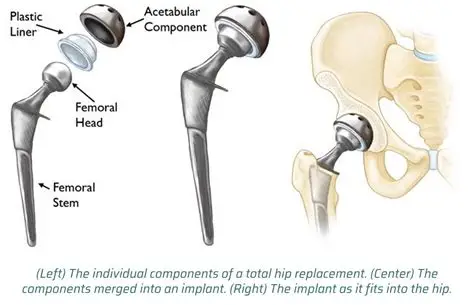
This is the most common type of hip replacement. In this procedure, the surgeon replaces both the femoral head (the ball) and the acetabulum (the socket) with prosthetic parts made of metal, ceramic, or plastic.
Partial Hip Replacement (PHR):
In this approach, only the femoral head is replaced while the socket remains intact. Doctors often recommend this method for elderly patients who have suffered a hip fracture.
Hip Resurfacing:
Instead of replacing the entire femoral head, the surgeon reshapes its surface and covers it with a metal cap. A metal liner is also placed inside the acetabulum. This method preserves more of the patient’s natural bone and works best for younger, active individuals.
When Hip Replacment Required
Hip replacement surgery is usually recommended when other treatments—such as physical therapy, medications, and lifestyle modifications-
fail to provide adequate relief. Several conditions can make hip replacement necessary, including:
Osteoarthritis:
This age-related condition causes the cartilage in the hip joint to wear down, leading to direct bone contact and painful friction.
Rheumatoid Arthritis:
An inflammatory disorder that triggers joint swelling, pain, and progressive joint damage.
Post-Traumatic Arthritis:
Hip injuries, fractures, or dislocations can cause long-term joint damage, eventually leading to arthritis.
Avascular Necrosis (AVN):
When blood flow to the femoral head decreases, the bone tissue begins to die and collapse, causing severe pain and joint dysfunction.
Hip Fractures:
Serious fractures, especially in older adults, often require hip replacement to restore normal mobility and function.
Bone Tumors:
Tumors that develop in or around the hip joint may necessitate joint replacement to remove diseased tissue and maintain stability.
Why Needs Surgery
Not everyone with hip pain requires surgery. However, hip replacement surgery may become necessary in certain cases, such as when:
Severe and persistent hip pain interferes with daily activities like walking, climbing stairs, or sitting.
Mobility in the hip joint becomes significantly restricted.
Stiffness or swelling continues despite medication or physical therapy.
Hip pain disrupts sleep and affects overall comfort.
Dependence on mobility aids such as canes, crutches, or walkers increases.
Patients who experience extensive hip joint damage due to arthritis, fractures, or avascular necrosis (AVN) are often the best candidates for hip replacement surgery.
How It is performed?
Hip replacement surgery involves removing the damaged parts of the hip joint and replacing them with artificial implants. The procedure generally follows these steps:
Anesthesia: The surgeon administers either general anesthesia, which renders the patient unconscious, or spinal anesthesia, which numbs the lower half of the body.
Incision: The surgeon makes an incision on the lateral or anterior side of the hip.
Removal of Damaged Bone and Cartilage: The surgeon excises the affected cartilage and bone from the hip joint.
Implantation of Prosthetic Components: The surgeon reshapes the acetabulum in the pelvis and places a prosthetic cup. The femoral head is removed, and a metal stem is inserted into the femur. Finally, a ball made of ceramic, metal, or plastic is attached to the top of the femoral stem to fit into the prosthetic cup.
Closure: The surgeon sutures or staples the incision and applies a dressing to protect the area.
Recovery and Rehabilitation: Physical therapy begins shortly after surgery to help the patient regain mobility, strength, and flexibility.
Hip Resurfacing
Hip resurfacing serves as an alternative to total hip replacement, particularly for younger and more active patients.
This procedure is distinct from traditional replacement as it retains a greater amount of the natural bone structure.
The process of hip resurfacing involves several key steps:
- Reshaping the Femoral Head: Rather than excising the femoral head, it is contoured to accommodate a metal cap.
- Reshaping the Acetabulum: The acetabulum is prepared, and a metal cup is inserted to replace the damaged cartilage.
- Insertion of Metal Implants: The contoured femoral head is fitted with a smooth, rounded metal cap
that aligns with the metal socket, facilitating seamless movement.
Book Your Appointment Today
Regain your pain-free life and active mobility today. Book your appointment with Dr. Kesarkar,
Primary Hip replacement in Adilabad for expert consultation and advanced treatment options .Contact Now