Knee replacement surgery Specialist in Adilabad
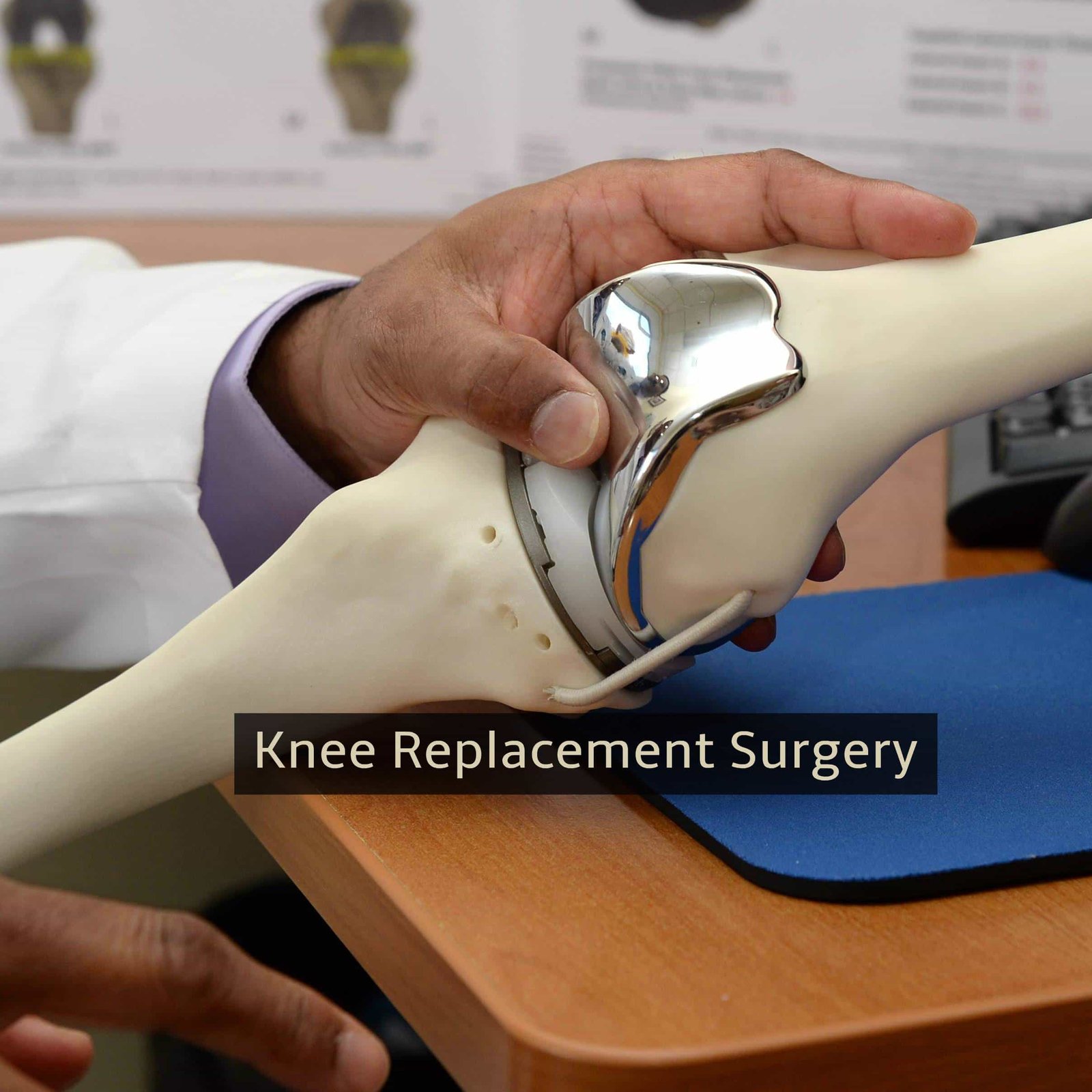
Knee replacement surgery Specialist in Adilabad
Knee replacement surgery Specialist in Adilabad serves as a sophisticated hinge joint that links the femur, or thigh bone, to the tibia, known as the shin bone. This joint facilitates movements such as flexion and extension, contributing to stability during activities such as walking and running. Encased by cartilage, ligaments, tendons, and muscles, the knee joint operates in unison to enable movement and mitigate the risk of injury. However, prolonged use can result in deterioration, potentially resulting in conditions such as arthritis, which may necessitate surgical intervention, including knee replacement. Knee replacement surgery, referred to as knee arthroplasty, is a surgical intervention that involves the replacement of damaged or deteriorated sections of the knee joint with artificial components, known as prostheses.
Knee replacment surgery in Adilabad
This procedure is frequently conducted to alleviate pain, enhance joint functionality, and restore mobility in
patients experiencing significant knee problems. knee replacement surgery is generally advised when conservative
measures, such as physical therapy, medications, or injections, fail to alleviate knee pain or improve functional capabilities.
Types of knee replacement surgery
Knee replacement surgeries are categorized into various types, depending on the extent of damage
and the individual requirements of the patient:
- Total Knee Replacement (TKR)
This is the most prevalent procedure, involving the complete replacement of the knee joint,
including the damaged cartilage, with artificial components made from metal, plastic, and occasionally ceramic.
The femur, tibia, and patella are all substituted during this operation.
- Partial Knee Replacement (PKR)
: This procedure focuses on replacing only the damaged section of the knee joint while preserving the healthy areas.
It is suitable for patients whose knee joint damage is confined to a specific region.
- Kneecap Replacement (Patellofemoral Arthroplasty)
: This surgery targets the replacement of the damaged patella (kneecap) and the corresponding surface of the femur
where the kneecap articulates. It is generally indicated for patients experiencing isolated issues with the kneecap.
- Complex or Revision Knee Replacement
This type of surgery is conducted when a prior knee replacement has not succeeded, or when
the patient presents with significant deformities or other complications that necessitate more intricate surgical interventions.
When Knee Replacement surgery Required?
The primary indications for knee replacement include.
Osteoarthritis: This is the leading cause of damage to the knee joint, characterized by the gradual deterioratio
of cartilage, resulting in painful bone-on-bone contact.
Rheumatoid Arthritis: This autoimmune condition leads to inflammation and subsequent damage to the knee joint.
Post-Traumatic Arthritis: This type of arthritis arises following a knee injury, such as fractures or ligament tears.
Knee Deformities: Conditions such as bow-leggedness or knock-knees can lead to uneven wear on the joint.
Knee replacement is usually considered when pain becomes persistent and intense, hindering daily activities like walking,
climbing stairs, and standing, particularly when other treatment options have proven ineffective.
Who Needs Knee Replacement surgery ?
Knee replacement surgery is frequently recommended for individuals who meet certain criteria, including:
- Experiencing persistent knee pain that interferes with everyday activities such as walking, bending, or standing.
- Dealing with knee stiffness that restricts their range of motion.
- Not achieving relief through medications, physical therapy, or other non-surgical treatments.
- Suffering from significant degeneration of the knee joint due to conditions such as osteoarthritis,
- rheumatoid arthritis, or injury.
While candidates for knee replacement surgery are typically older adults, the procedure may
also be appropriate for younger patients who have experienced severe knee damage, particularly
as a result of trauma or conditions like arthritis.
Knee Replacement surgery Performed?
Knee replacement surgery is generally conducted under either general anesthesia or spinal anesthesia.
The procedure consists of several key steps:
Preparation: The surgeon initiates the process by making an incision in the knee to gain access to the
joint, followed by the careful removal of the damaged bone and cartilage.
Prosthetic Placement: The surgeon then positions and secures the artificial components, known as
prostheses, to the femur, tibia, and occasionally the patella. These prosthetic components are made from
materials such as metal, plastic, or ceramic, and are engineered to mimic the natural movement of the knee.
Alignment and Testing: The surgeon verifies that the prosthetic components are correctly aligned, assessing
their fit and movement to ensure the joint functions smoothly.
Closure: Once the prostheses are securely in place and the knee’s functionality is confirmed,
the incision is closed using sutures or staples.
Following the surgery, patients usually participate in physical therapy to restore strength, mobility, and
range of motion in the knee. While recovery times can differ among individuals, many patients
experience significant pain relief within a few weeks, with complete recovery potentially taking several months.
Book Your Appointment Today
Regain your pain-free life and active mobility today. Book your appointment with Dr. Kesarkar,
Best knee Replacement surgery specialist in Adilabad , for expert consultation and advanced treatment options.Contact Now